Based in Staines-upon-Thames
Professional Dead Woodingin Staines-upon-Thames
Dead branches are the first part of a tree to let go in wind or heavy rain. Removing them protects what sits underneath and keeps the rest of the tree healthier.
The service
What dead wooding involves
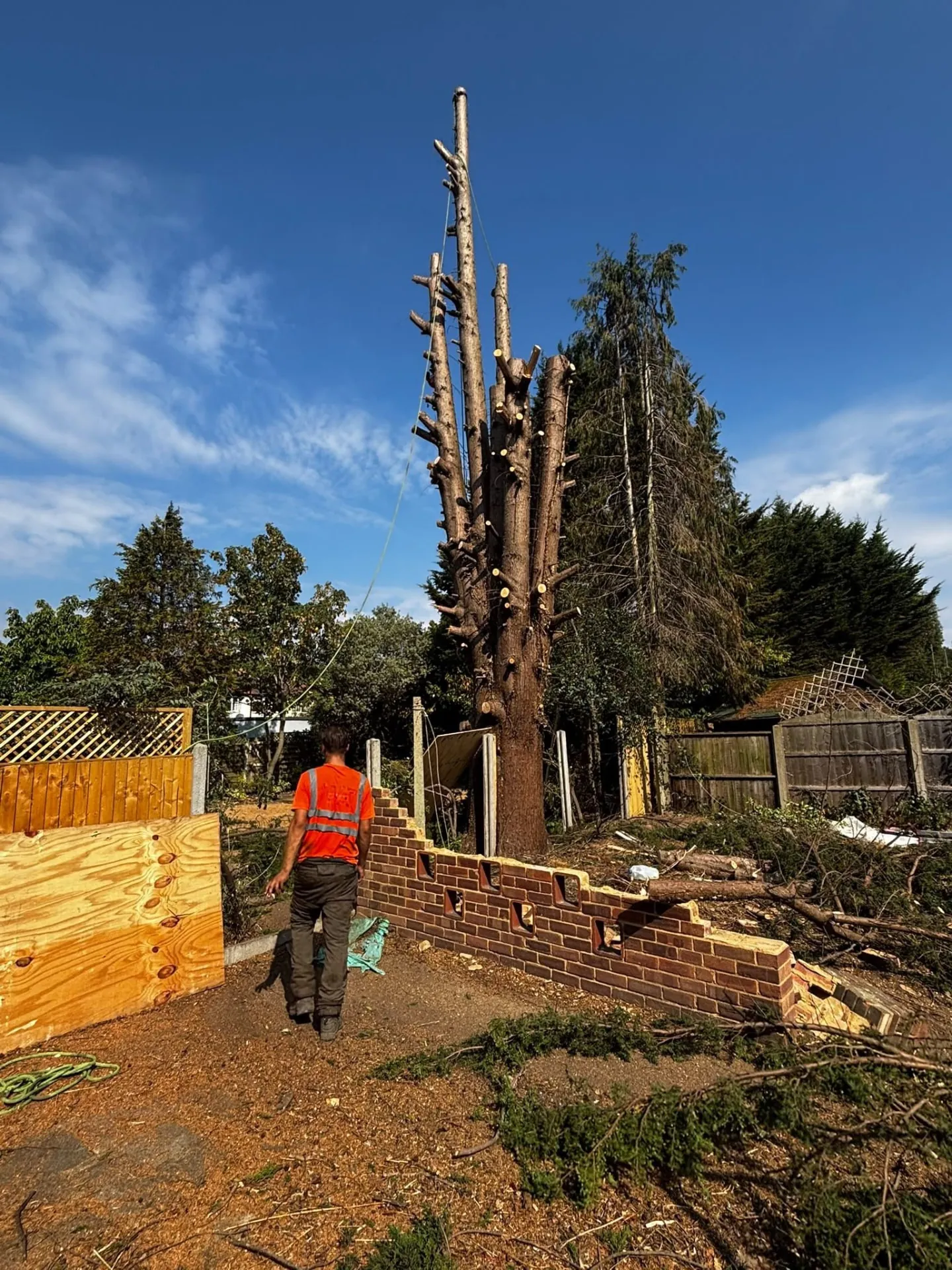
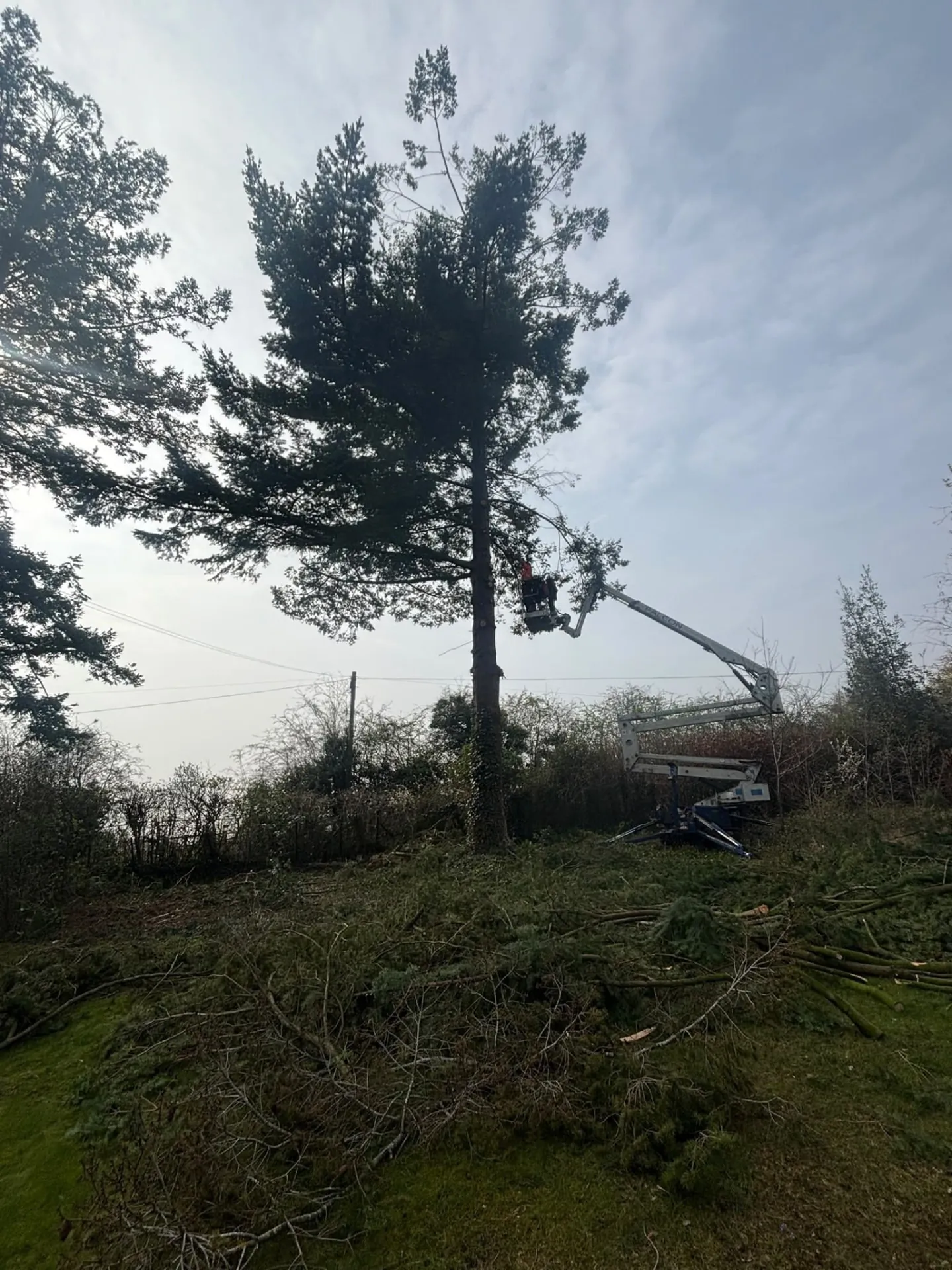
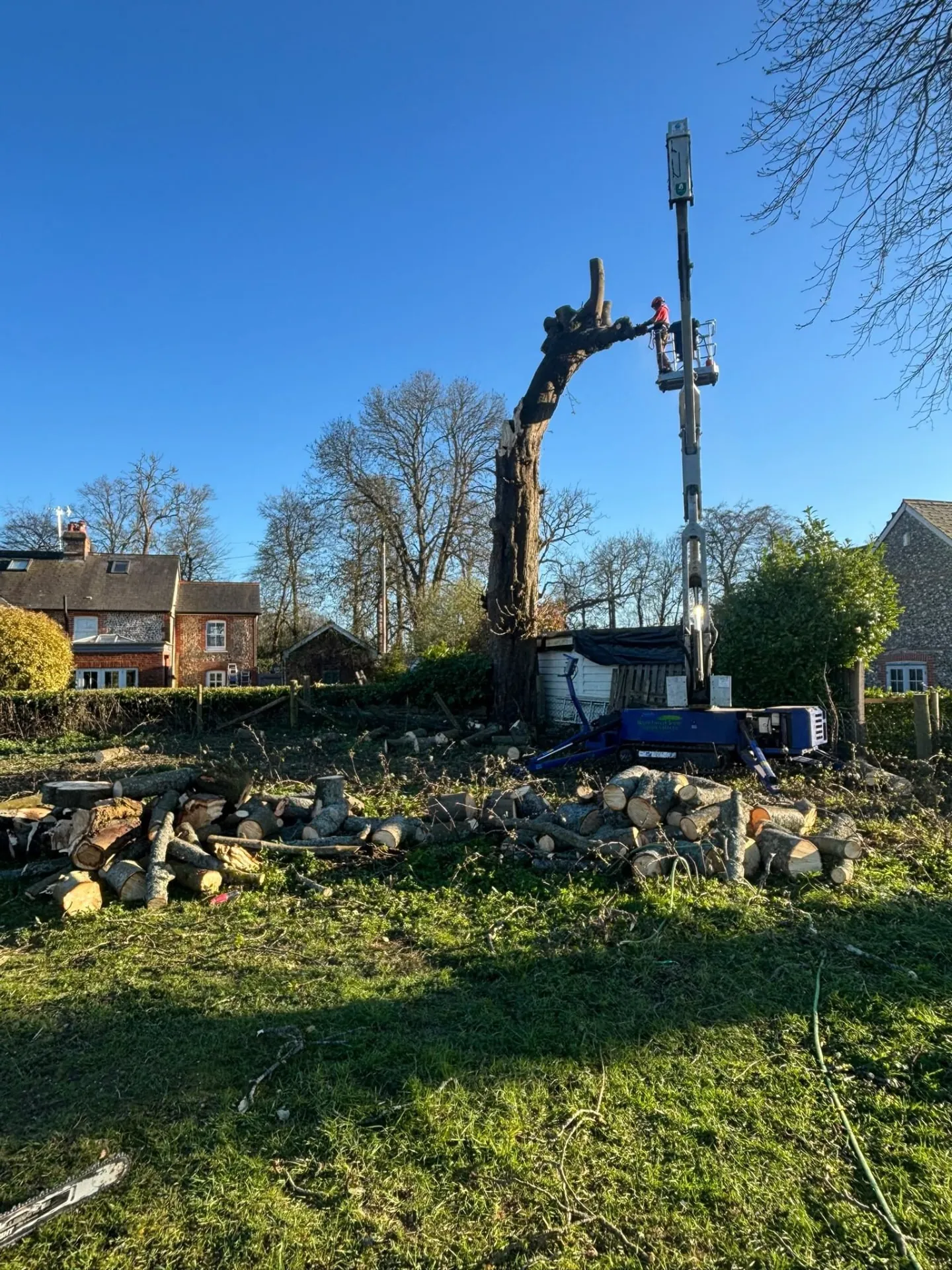
Dead wooding is the removal of dead, dying or diseased branches from a tree while leaving the healthy structure in place. It targets the limbs that no longer have leaves in season, have lost bark, or show signs of decay, fungal growth or splitting, without reducing or reshaping the rest of the crown.
It is suited to homeowners with mature trees overhanging a garden, driveway, shed or neighbouring property, as well as landlords and site managers responsible for trees near buildings, car parks or footpaths. It is usually needed after a period of drought or disease, following storm damage, or simply as part of keeping an older tree in good condition over time.
Dead wood is not always easy to spot from ground level, and judging which branches are safe to leave and which need to come out takes a trained eye. Charlie Fellowes, Founder, brings eight years of experience and NPTC and LANTRA qualifications to that assessment, working under £2 million public liability cover throughout.
Recent Jobs
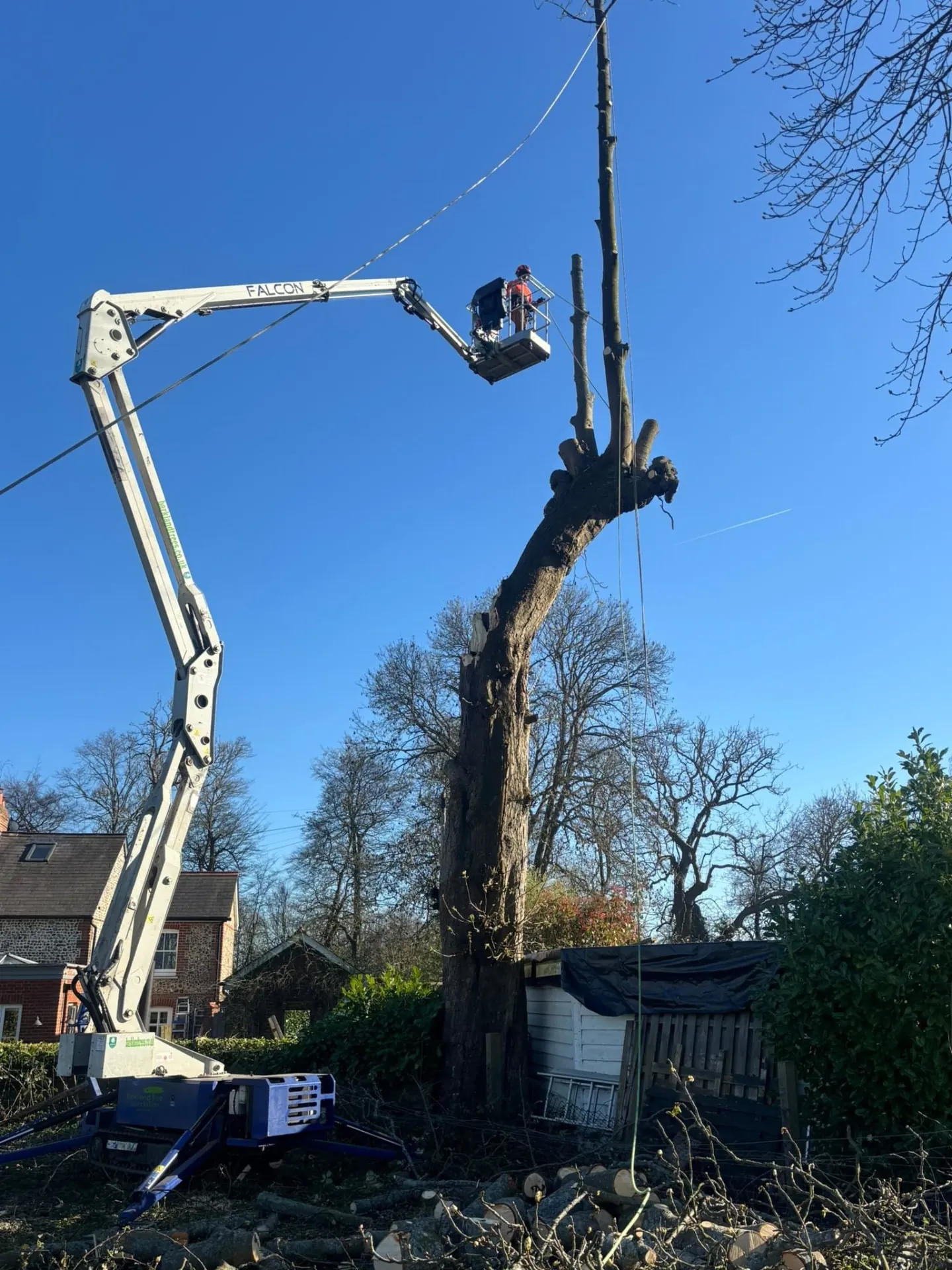
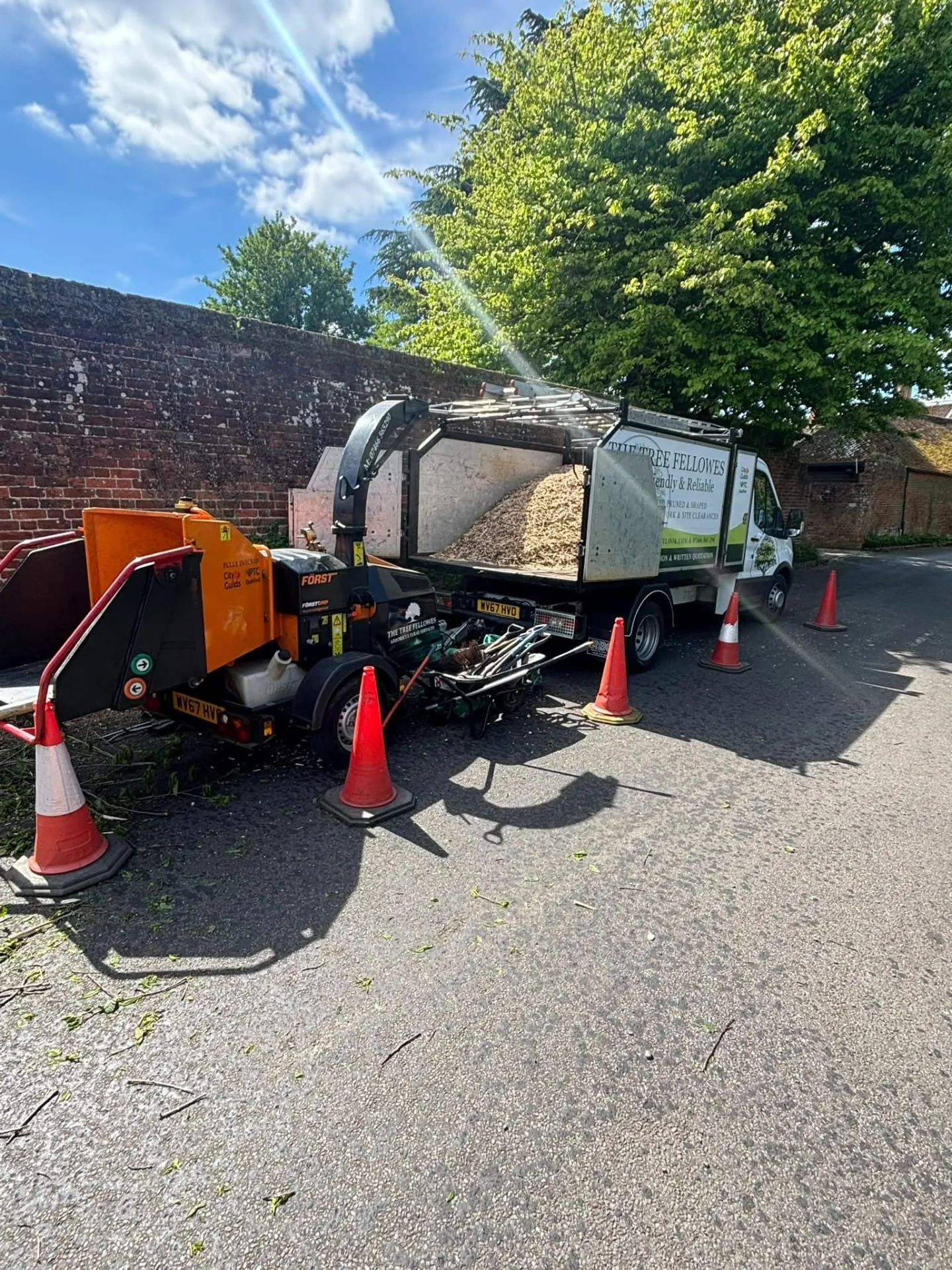
What happens if dead wood is left in place
Dead branches do not become safer with time. They dry out, lose structural strength, and are usually the first thing to come down in wind, snow load or heavy rain.
Falling branches
A dead limb can drop with no warning, regardless of weather, simply because it has lost the structural wood holding it in place.
Risk to people and property
Branches over driveways, patios, sheds or parked cars put anyone underneath at risk and can cause real damage on the way down.
Spread of decay
Fungal decay and disease in dead wood can spread into otherwise healthy parts of the tree if left unmanaged for long periods.
Common mistakes we see
- ✕Assuming a tree is healthy because it still has a full canopy: dead wood can sit hidden inside a live crown.
- ✕Cutting dead branches from a ladder rather than having them removed with the right rigging and access equipment.
- ✕Leaving large dead limbs over regularly used areas because they are not an obvious daily inconvenience.
- ✕Ignoring smaller dead wood that, over several seasons, adds up to a significant amount of weak material in the canopy.
How it works
Our dead wooding process
- 01
Inspection
The tree is assessed from the ground and, where needed, from within the canopy to identify dead, dying and diseased branches throughout the structure.
- 02
Planning the work
We agree with you which branches come out, taking account of what sits underneath and any access constraints on site.
- 03
Removal
Dead wood is cut and lowered using ropes or a rigging line where branches overhang buildings, cars or boundaries, keeping the surrounding area clear.
- 04
Site clearance
All cut material is removed and taken away as registered waste carriers, leaving the area underneath the tree clear and usable.
- 05
Completion
You review the finished tree with us if you wish, and payment is made once the work is complete; no deposit is taken beforehand.
Why dead wooding is worth doing
Removes the biggest risk first
Dead branches are the most likely part of any tree to fail, so removing them deals with the highest-risk material straight away.
Protects what is underneath
Cars, sheds, fences, patios and anyone walking or playing under the canopy are no longer at risk from that specific branch.
Supports the tree's condition
Taking out dead material allows the tree to direct its resources to live growth rather than wood that is already lost.
Keeps the tree's shape
Unlike a reduction, dead wooding does not alter the tree's natural form; only the dead material is removed.
No deposit required
You are not asked for any money upfront. Payment is made once the branches are down and the site is cleared.
Fully insured work at height
Climbing and cutting are carried out under £2 million public liability cover, with NPTC and LANTRA training behind every decision made in the canopy.
In detail
Dead wood in more detail
Why trees develop dead wood
Dead wood forms naturally as a tree ages, as lower or inner branches lose access to light, or as a result of drought stress, root damage, pest attack or fungal disease. Some species, such as oak and ash, are more prone to carrying significant dead wood as they mature, while others shed small dead twigs continuously as part of normal growth.
Dead wood is not always a sign that a tree is unhealthy overall; many mature trees carry some dead material while remaining structurally sound elsewhere. The key is identifying which branches are a genuine risk to what is underneath, rather than removing every piece of dead material for its own sake.
Light, medium and heavy dead wooding
The scope of a dead wooding job depends on how much dead material a tree is carrying and where it sits. A light dead wood removes only branches of a minimum diameter that pose a direct risk, while a heavier specification removes smaller dead wood throughout the crown as well. The right level is agreed on site based on the tree's condition and what is below it.
Residential gardens and commercial sites
In a residential garden, dead wooding is often carried out alongside other work such as a reduction or crown lift, since access equipment is already on site. On commercial or shared sites (car parks, driveways, footpaths), dead wooding is frequently carried out on a routine cycle to manage risk to the public and to vehicles.
Consents and responsibility
Some trees are covered by a Tree Preservation Order or sit within a conservation area, which can affect what work is permitted. Checking this and obtaining any necessary consent before work starts is the customer's responsibility. Where a dead branch is overhanging a shared boundary or a neighbouring garden, it is worth confirming who is responsible for the tree before arranging the work, since this can affect how the job is agreed and paid for.
Related services
Areas we cover
Kingston upon Thames, Ealing, Farnborough, Richmond upon Thames, Watford, Maidenhead, Beaconsfield, Hammersmith, Fulham, Guildford.
Dead Wooding FAQs
How much does dead wooding cost?+
There is no published price list, since the cost depends on the size of the tree and the amount of dead wood involved. We provide a quote after assessing the tree, there is no deposit, and payment is made once the job is finished.
How long does dead wooding take?+
A single mature tree can often be done in a few hours, while larger trees or multiple trees on one site take longer. We can give you a time estimate once we have seen the tree.
What is the process for a dead wooding job?+
We inspect the tree, agree which branches need to come out, remove them with the appropriate rigging, and clear all the resulting debris from site before you pay.
Is dead wooding guaranteed?+
No written guarantee is offered on this or any other job. You are only asked to pay once the work has been completed to the agreed scope.
Will dead wood come back?+
Dead branches do not regrow, but trees naturally develop further dead wood over time as they age, so periodic dead wooding is sensible maintenance for mature trees.
Can dead wooding be done as an emergency?+
If a dead branch is an immediate danger, for example hanging over a path or building, this is treated as emergency work and covered 24/7. Routine dead wooding is carried out 7am to 6pm, seven days a week.
Do you remove the cut branches and debris?+
Yes, all cut material is removed from site. We are a registered waste carrier, so nothing is left behind for you to dispose of.
Which areas do you cover for dead wooding?+
We work across Kingston upon Thames, Ealing, Farnborough, Richmond upon Thames, Watford, Maidenhead, Beaconsfield, Hammersmith, Fulham, Guildford and nearby areas.
Can dead wooding be combined with other tree work?+
Yes. It is often carried out alongside a crown reduction, crown lift or stump grinding in the same visit, since the access equipment needed is already in place.
Does dead wooding affect how a tree looks?+
The natural shape of the crown stays the same. Only dead, dying or diseased material is removed, so the tree keeps its established form rather than being reshaped.
Book a dead woodingassessment today
Get a no-obligation quote on your tree. No deposit required: you pay only once the work is complete.
NPTC & LANTRA qualified · £2m insured · No deposit