Based in Staines-upon-Thames
Tree Removal inStaines-upon-Thames
A dangerous, dying or unwanted tree taken down by NPTC and LANTRA qualified climbers, with the site swept, the timber dealt with, and nothing left for you to sort out.
The service
What tree removal involves, and when it's the right call
Tree removal is the complete felling and dismantling of a tree, from the crown down to ground level, followed by clearing every branch, log and offcut from the site. It is different from a reduction or a prune, where the tree is kept but reshaped. Removal is the option when a tree can no longer stay where it is, whether that's because it's dead, diseased, storm-damaged, growing too close to a building, or simply in the wrong place for what you want to do with the garden.
Homeowners across Staines, Kingston upon Thames, Richmond upon Thames, Ealing, Hammersmith, Fulham, Watford, Maidenhead, Beaconsfield, Farnborough and Guildford call for tree removal for a handful of recurring reasons: a conifer that's outgrown the plot, a leaning tree after wind, a stump-riddled tree causing subsidence concerns, or a straightforward garden redesign that needs a clear slate. Landlords and property managers call ahead of a sale or a new tenancy, when an overgrown tree is flagged on a survey or simply makes a property harder to let.
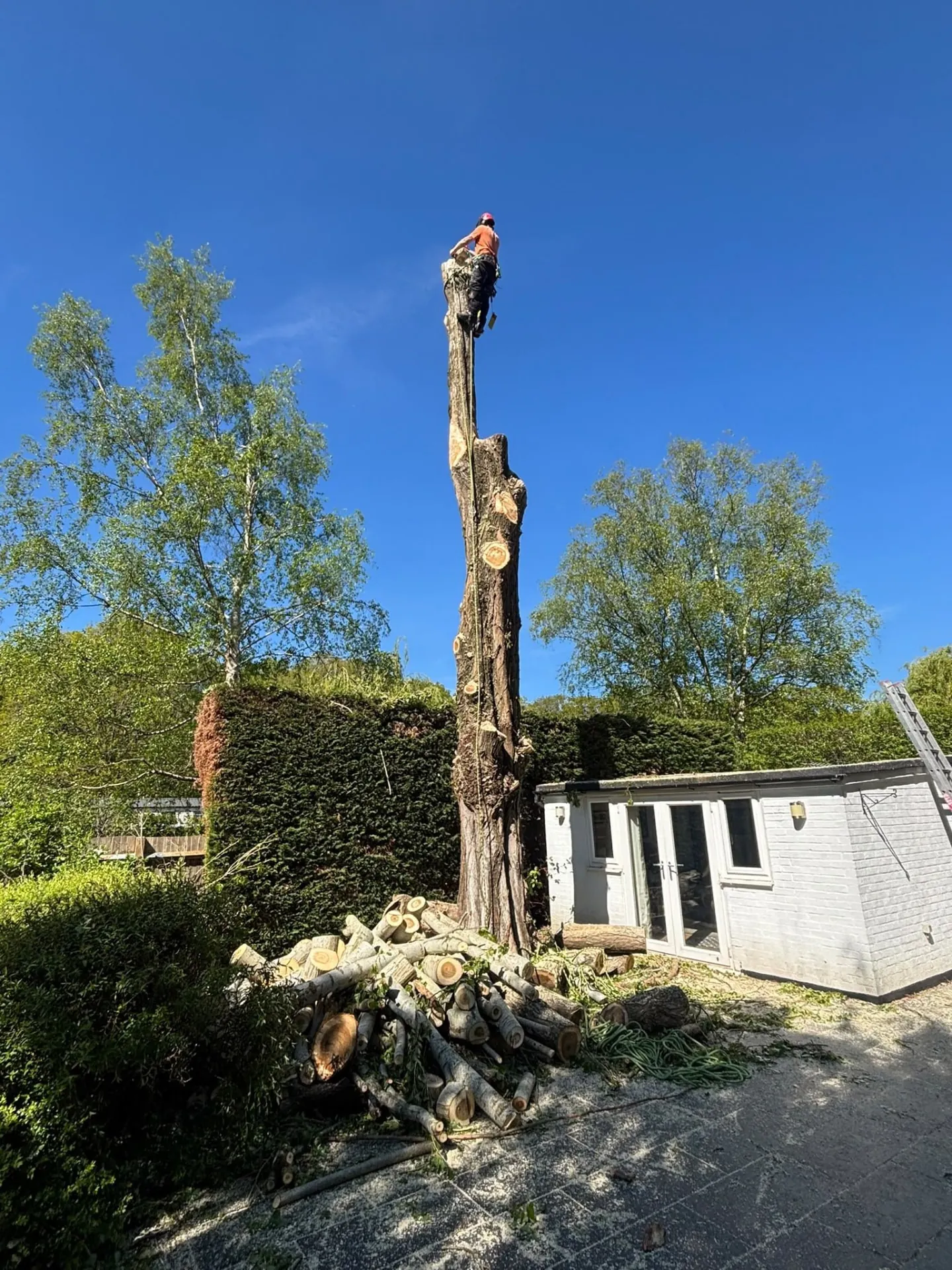
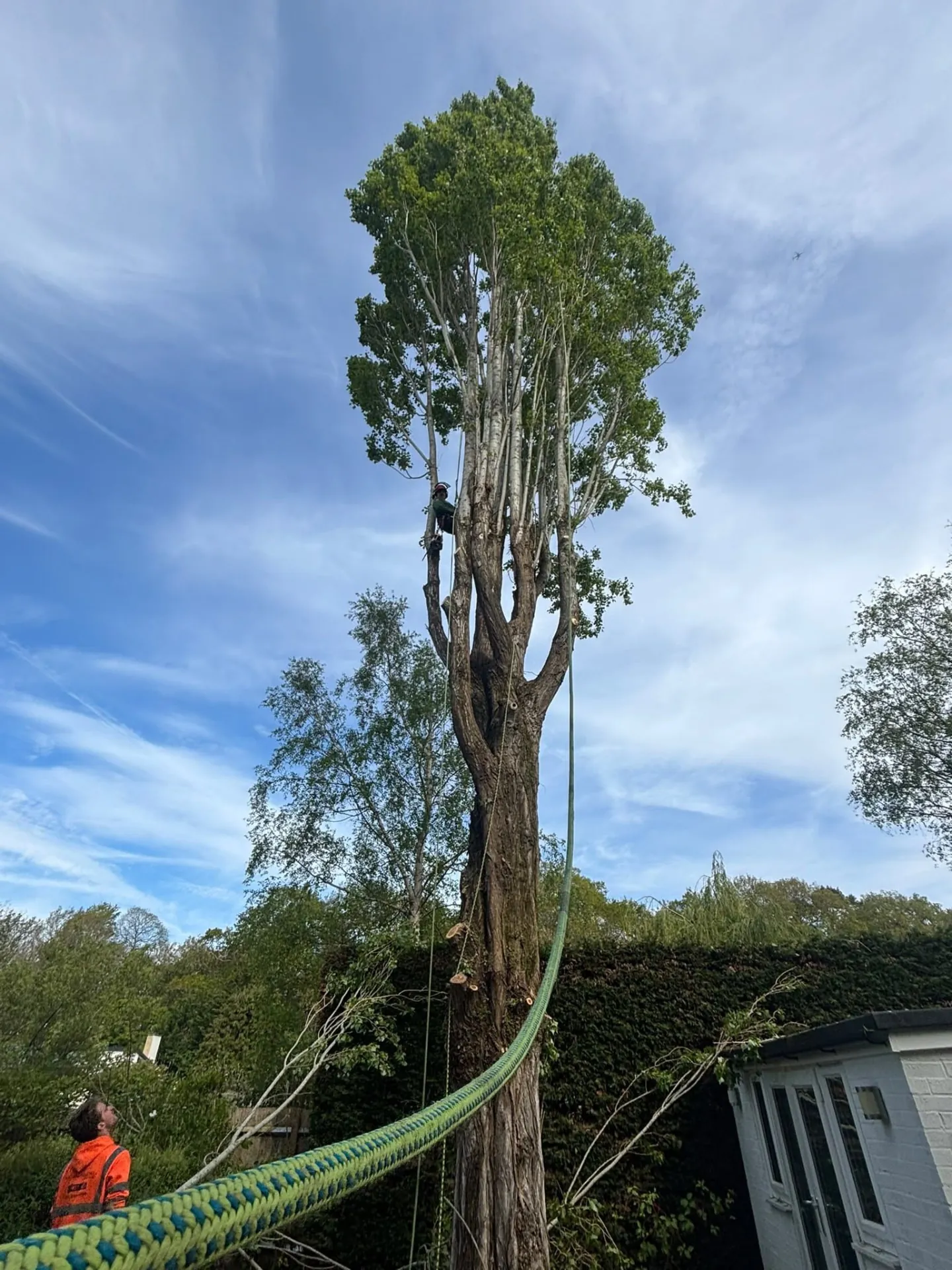
Felling a mature tree in a residential garden, especially one close to a house, a shed, a greenhouse or a neighbour's fence, is not a job for ladders and a chainsaw bought at the weekend. It involves rigging, controlled sectional dismantling, rope work and a clear understanding of how a trunk will behave under tension once cuts are made. The Tree Fellowes has removed trees in tight town gardens and on open rural plots across West London and Surrey, bringing each one down in sections where space is limited, and felling whole where there's room, always working to leave the surrounding planting, paving and structures untouched.
Tree removal is not something to decide on alone if the tree sits near a conservation area or has a Tree Preservation Order attached. Getting consent for felling a protected tree is the customer's responsibility, so it's worth checking with your local planning authority before any work is booked, particularly if the tree is large, old, or visible from a public road.
Recent Jobs
What happens if a problem tree is left standing
A tree that needs to come down rarely improves by waiting. Dead wood gets heavier and more brittle, root damage spreads further underground, and a leaning trunk only leans further with the next storm.
Falling limbs and storm risk
Dead or dying trees drop branches without warning, and a full-sized trunk brought down by wind can total a car, a fence, a greenhouse or a roof in seconds. The risk rises every winter the tree is left standing.
Root damage to foundations and drains
Large trees close to a house can send roots under foundations, patios and drainage runs. Left long enough, this shows up as cracked paving, blocked pipes or movement in a wall, all more expensive to put right than the removal itself would have been.
Disease spreading to neighbouring trees
A diseased or pest-infested tree can pass the problem to healthy trees nearby. Taking it down promptly, and disposing of the material as a registered waste carrier, stops the spread rather than letting it move along a boundary line or hedge.
Common mistakes we see
- ✕Attempting to fell a tree without the rigging or rope work to control where sections land.
- ✕Waiting until after a storm, when a leaning or storm-damaged tree becomes an emergency rather than a planned job.
- ✕Cutting down a tree without first checking whether it carries a Tree Preservation Order or sits in a conservation area.
- ✕Leaving stump and root material behind, which regrows, attracts fungus, or blocks a planned patio or driveway.
- ✕Choosing a contractor without public liability insurance, leaving the homeowner exposed if a neighbour's property is damaged.
How it works
How a tree removal job runs from first call to clear-up
- 01
Site visit and fixed quote
Charlie Fellowes or a member of the team visits the property to look at the tree, the access, and anything nearby that needs protecting, such as a greenhouse, a pond or a shared fence. A fixed quote is given on site, in writing, with no deposit required.
- 02
Planning the dismantling method
Depending on space, the tree is either felled whole or taken down section by section using rigging and rope work, lowering each piece to the ground under control rather than letting it fall freely.
- 03
Removal of the tree
Climbers work from the top down, removing the crown first, then working through the main stem in manageable sections until the trunk is at ground level, with the stump left ready for grinding if that's part of the job.
- 04
Timber and waste clearance
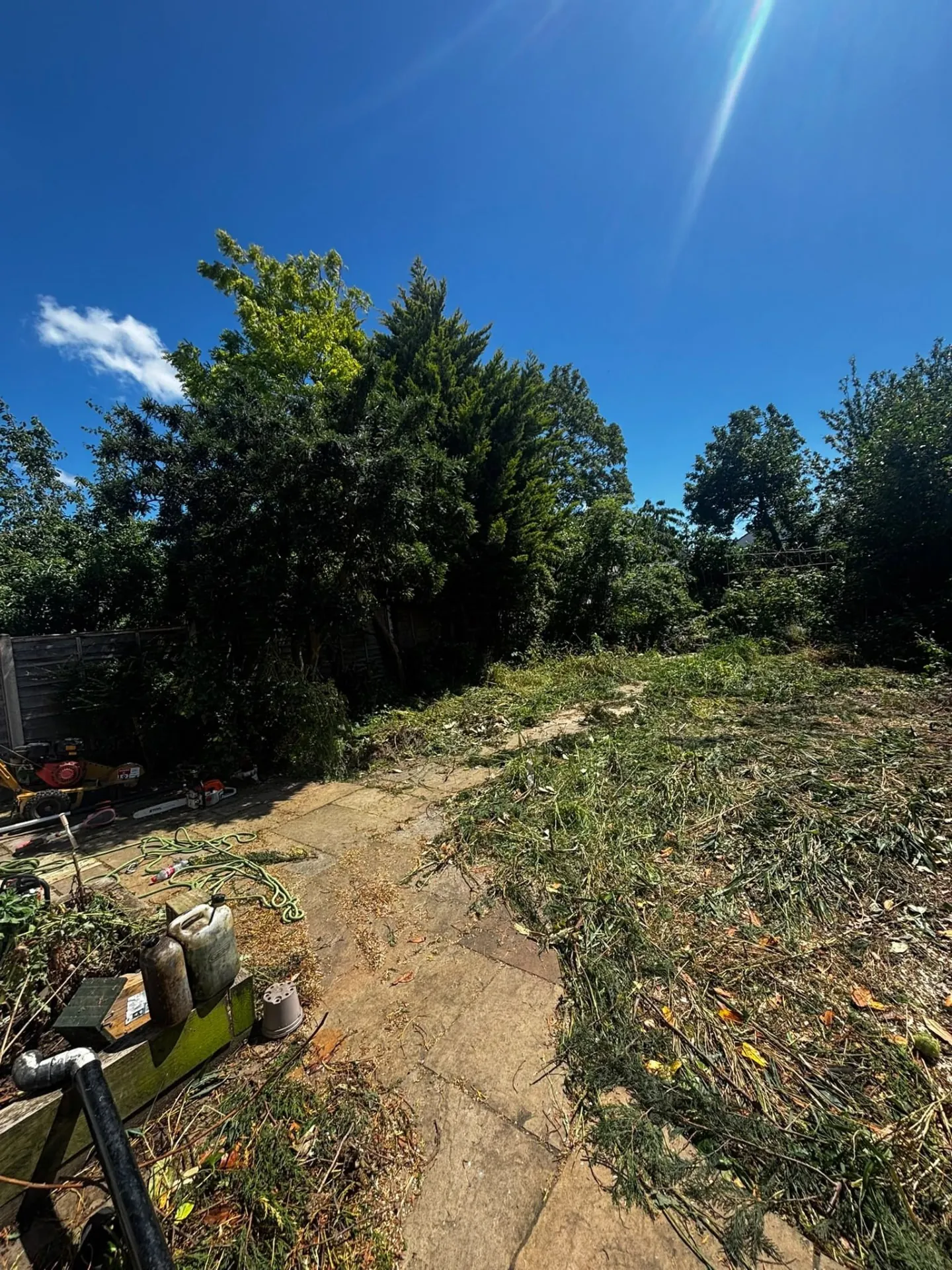
All brash, logs and offcuts are removed from site as a registered waste carrier. Where logs are wanted for firewood, these can be left stacked and ready to season instead.
- 05
Final site sweep and sign-off
The area is swept and checked before anyone leaves. Payment is taken once the work is finished and you're satisfied with what's been done, not before.
What professional tree removal gets you
No risk to your property
Rigged, sectional dismantling keeps falling timber away from sheds, fences, greenhouses and neighbouring gardens.
Trained, qualified climbers
Work is carried out by NPTC and LANTRA qualified tree surgeons with eight years of experience in residential and commercial gardens.
Covered by £2 million public liability insurance
If anything were ever damaged during the job, the cover is in place to deal with it.
Nothing left behind
As a registered waste carrier, all timber and brash leaves the site legally and the area is left swept and clear.
No deposit, no upfront risk
You pay once the work is complete and you're happy with it, not before a single cut is made.
A clear space to build on
Whatever the land is needed for next, whether that's a patio, a driveway or simply more light, removal gives you a clean start.
In detail
Tree removal methods and when each one applies
Whole-tree felling vs sectional dismantling
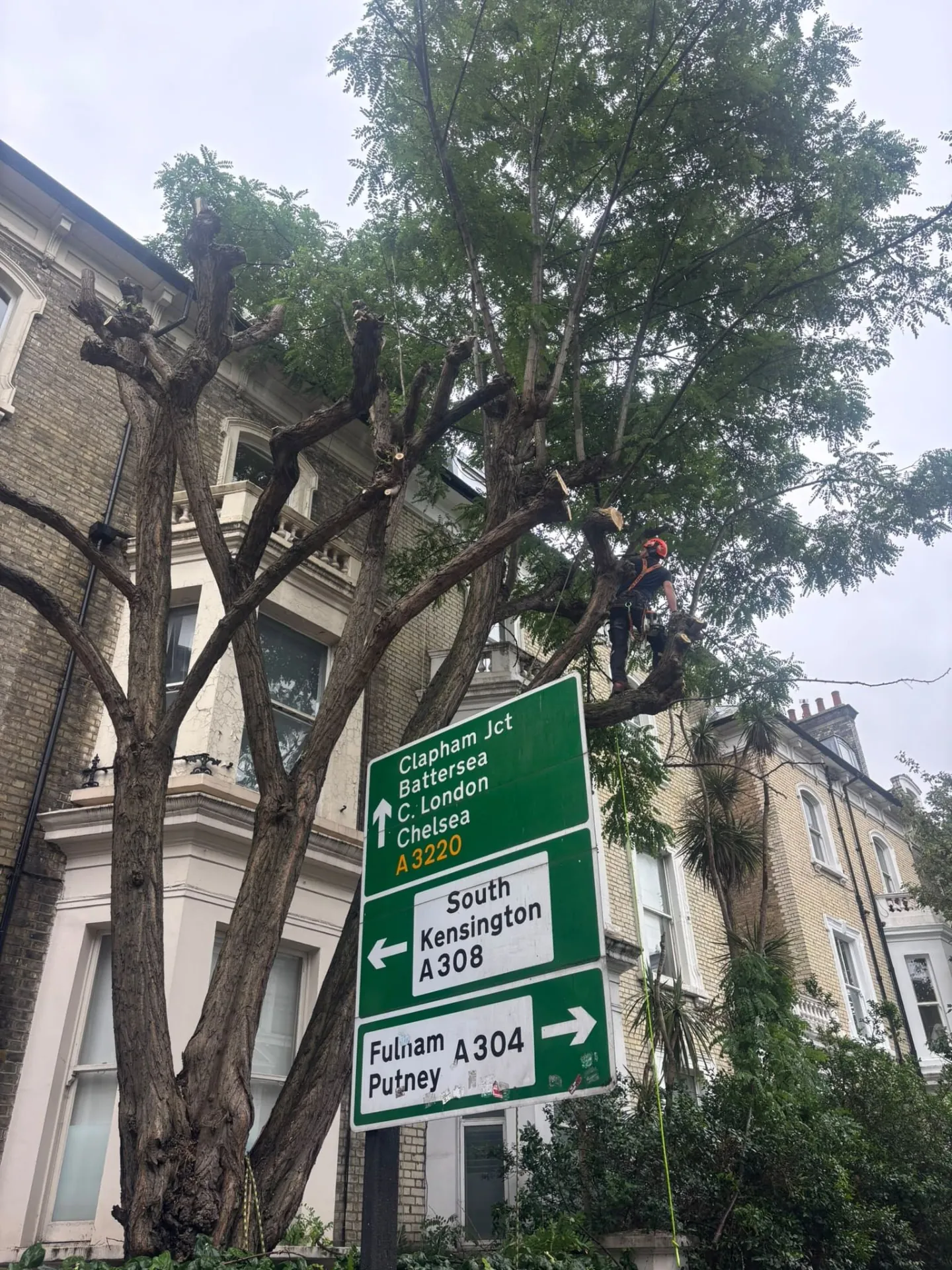
Where there's open space around a tree, directional felling can be used to bring the whole trunk down in one controlled cut, which is faster and more cost-effective. In a typical back garden in Kingston upon Thames, Richmond or Ealing, that space usually doesn't exist, so the tree is dismantled in sections instead. A climber works from the top, removing the crown branch by branch, then takes the stem down in manageable lengths, each one lowered on a rope rather than dropped, so nothing lands on a fence, shed or flower bed below.
The choice between the two methods is made on site during the quote visit, based on the tree's size, lean, condition and what's around it, including overhead cables, neighbouring trees and any structures within falling distance.
Residential vs commercial tree removal
Domestic removals tend to involve tighter access, more to protect nearby, and a need to keep noise and disruption contained to one visit. Commercial and development sites, by contrast, often involve multiple trees, larger machinery access, and coordination with other contractors or site managers. The Tree Fellowes carries out both, adjusting the method and timing to suit a quiet residential street in Maidenhead or a larger clearance on a commercial plot near Guildford or Farnborough.
Dealing with hazardous and storm-damaged trees
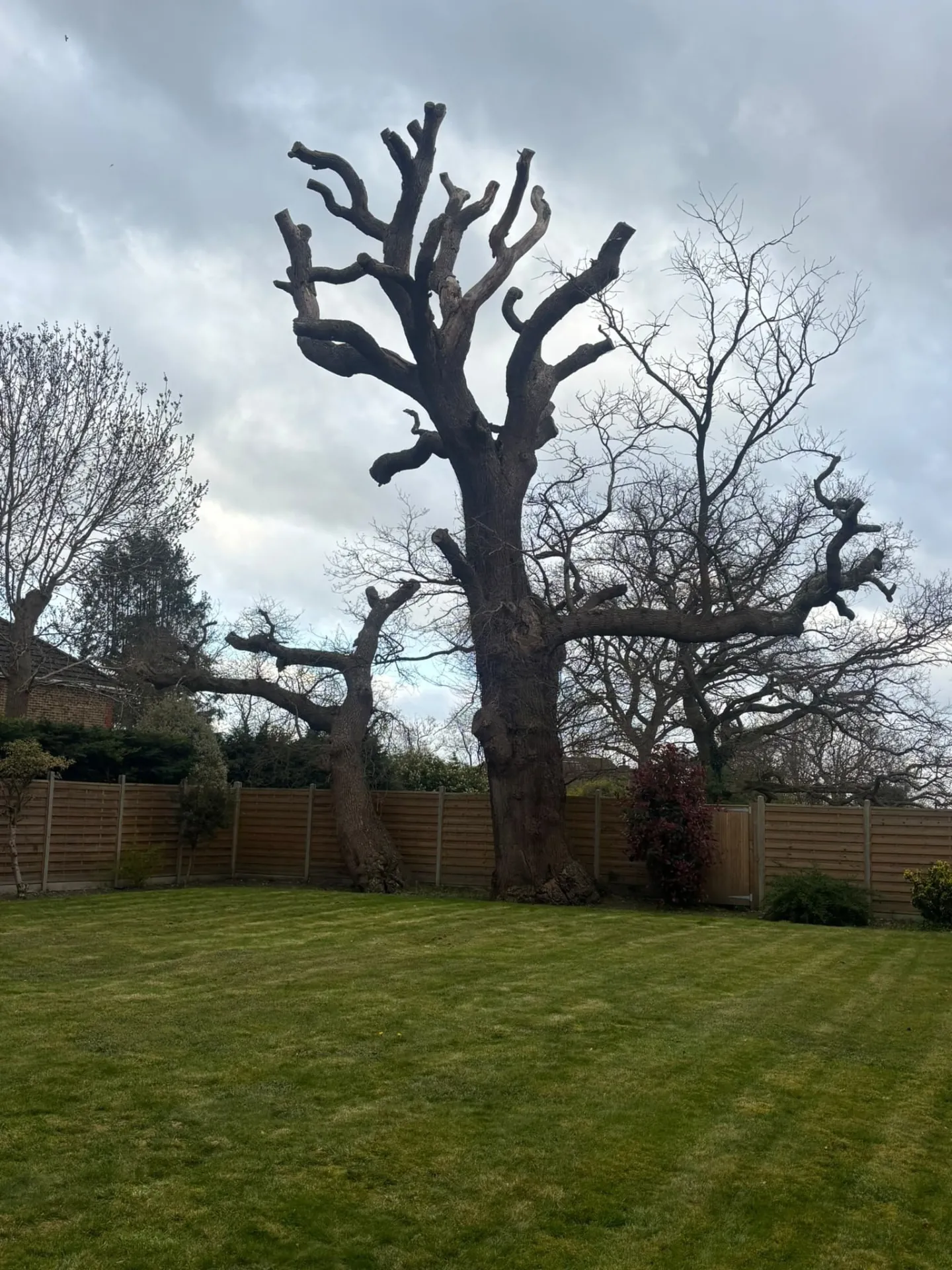
Trees that have already started to fail, through disease, decay, root damage or storm impact, are treated differently from a routine removal. These are assessed for the safest order of cuts, since a compromised trunk can behave unpredictably once weight is removed from one side. For storm damage and genuinely dangerous trees, emergency callouts are available around the clock; routine removals are carried out within the standard 7am to 6pm working hours, seven days a week.
What happens to the timber and the stump
Once a tree is down, the material is either removed from site as waste, carried out under registered waste carrier status, or left as logs for firewood if that's preferred. The stump can be left in the ground, dug out, or ground down to below soil level as a separate but related job, which clears the way for turf, planting or paving without a stump left to rot or regrow suckers.
Related services
Areas we cover
Kingston upon Thames, Ealing, Farnborough, Richmond upon Thames, Watford, Maidenhead, Beaconsfield, Hammersmith, Fulham, Guildford.
Tree Removal FAQs
How much does tree removal cost?+
There's no published price list because every tree, every garden and every access point is different. What's fixed is the process: a site visit, a quote given in writing, and no deposit taken. You only pay once the work is finished.
How long does a tree removal job take?+
Most domestic removals are completed in a single visit, often within a few hours, depending on the size of the tree and the access available. Larger or more complex jobs, such as a tall tree close to a building, may take a full day.
What does the removal process actually involve?+
After a site visit and a fixed quote, the tree is either felled whole or dismantled in sections using rope work, the timber and brash are cleared from site, and the area is swept before the job is signed off.
Do you offer a guarantee on the work?+
There's no written guarantee on tree removal. What's offered instead is a clear process: a fixed quote agreed up front, no deposit, and payment taken only once you're satisfied the job is finished to your eye.
Will the tree grow back after removal?+
The tree itself won't regrow once felled, though some species can send up suckers from the stump or roots if these are left in the ground. Stump grinding removes this risk and clears the area for replanting or paving.
Can you remove a tree in an emergency, such as after a storm?+
Yes. Emergency callouts for storm damage and fallen or dangerous trees are available 24/7. Routine, non-emergency removals are carried out between 7am and 6pm, seven days a week.
Do I need permission to remove a tree?+
If the tree carries a Tree Preservation Order or sits within a conservation area, getting consent before any work starts is the customer's responsibility. It's worth checking with your local council before booking if you're unsure.
Which areas do you cover for tree removal?+
Jobs are carried out across Staines, Kingston upon Thames, Ealing, Farnborough, Richmond upon Thames, Watford, Maidenhead, Beaconsfield, Hammersmith, Fulham and Guildford, with reviews from customers across all of these areas.
Get a fixed quote for yourtree removal this week
Call or message The Tree Fellowes for a site visit and a written quote, with no deposit and nothing to pay until the job is done to your satisfaction.
NPTC & LANTRA qualified · £2m insured · No deposit