Based in Staines-upon-Thames
Fallen Tree Removal inStaines-upon-Thames
A tree down after a storm blocks access, damages what it lands on, and keeps presenting risk until it is cut and cleared. We remove it in sections and leave the site usable.
The service
What fallen tree removal involves
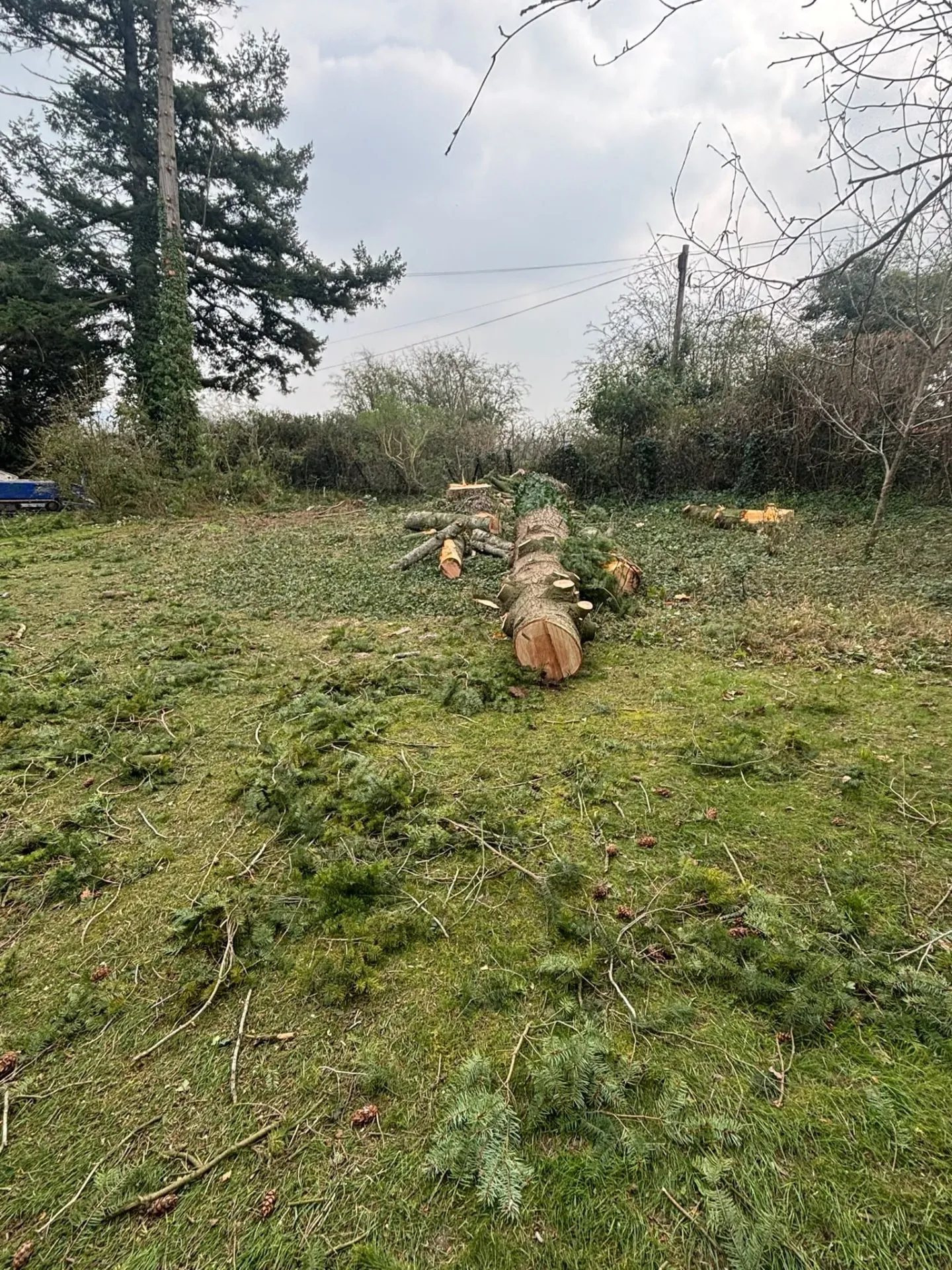
Fallen tree removal is the cutting, sectioning and clearing of a tree that has already come down, whether from storm damage, root failure, disease or old age. It covers everything from a tree lying flat across a lawn or driveway to one caught up against a fence, shed or neighbouring tree.
It is needed by homeowners, landlords and anyone whose land has a tree down, usually after severe weather but sometimes simply because a tree has reached the end of its natural life and given way. A fallen tree is rarely a simple job of cutting it into logs: the trunk and root plate can still carry weight and tension that make the work genuinely dangerous without the right approach.
Professional removal matters because a fallen tree can trap energy in bent branches, a twisted trunk, or a partially lifted root plate, any of which can move suddenly when cut. Charlie Fellowes, Founder, has eight years' experience assessing and removing fallen trees, is NPTC and LANTRA qualified, and works under £2 million public liability cover throughout.
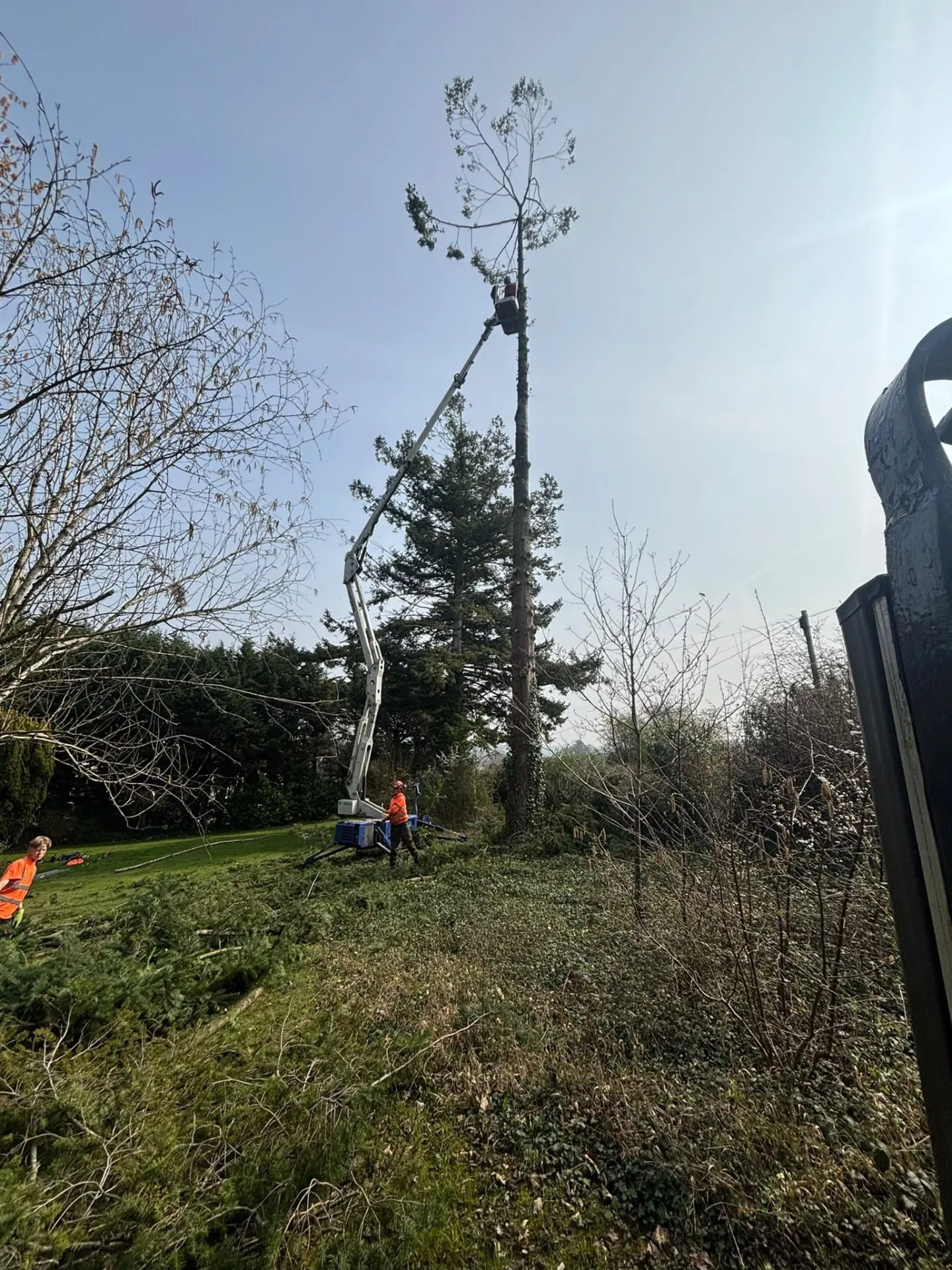
Recent Jobs
What happens if a fallen tree is left in place
A fallen tree does not resolve itself. Left alone, it continues to block access, damage what it is resting on, and present risk to anyone who goes near it.
Blocked access
A tree across a driveway, path or garden can stop vehicles moving, block bins from being collected, and make parts of a property unusable.
Ongoing property damage
A trunk or branch resting on a fence, shed, car or flower bed can continue to cause damage the longer it sits there, especially in further wind or rain.
Hidden tension and movement
A fallen tree can still be under tension from bent limbs or a partly-lifted root plate, which means it can shift or roll without warning even after it looks settled.
Common mistakes we see
- ✕Attempting to cut a fallen trunk with a domestic chainsaw without understanding where the tension is held.
- ✕Trying to drag or roll a fallen tree clear without first checking how it is resting and what is still attached.
- ✕Removing visible branches while leaving the main trunk and root plate, which is often the heaviest and highest-risk part of the job.
- ✕Delaying removal because the tree 'isn't in the way', when root damage or further decay can still be progressing underneath.
How it works
How we remove a fallen tree
- 01
Assessment
We check how the tree fell, what it is resting against, and where tension or movement risk is held before any cutting starts.
- 02
Safe sectioning plan
The trunk and branches are planned into manageable sections, working from the point of least tension towards the most, to avoid sudden movement.
- 03
Cutting and removal
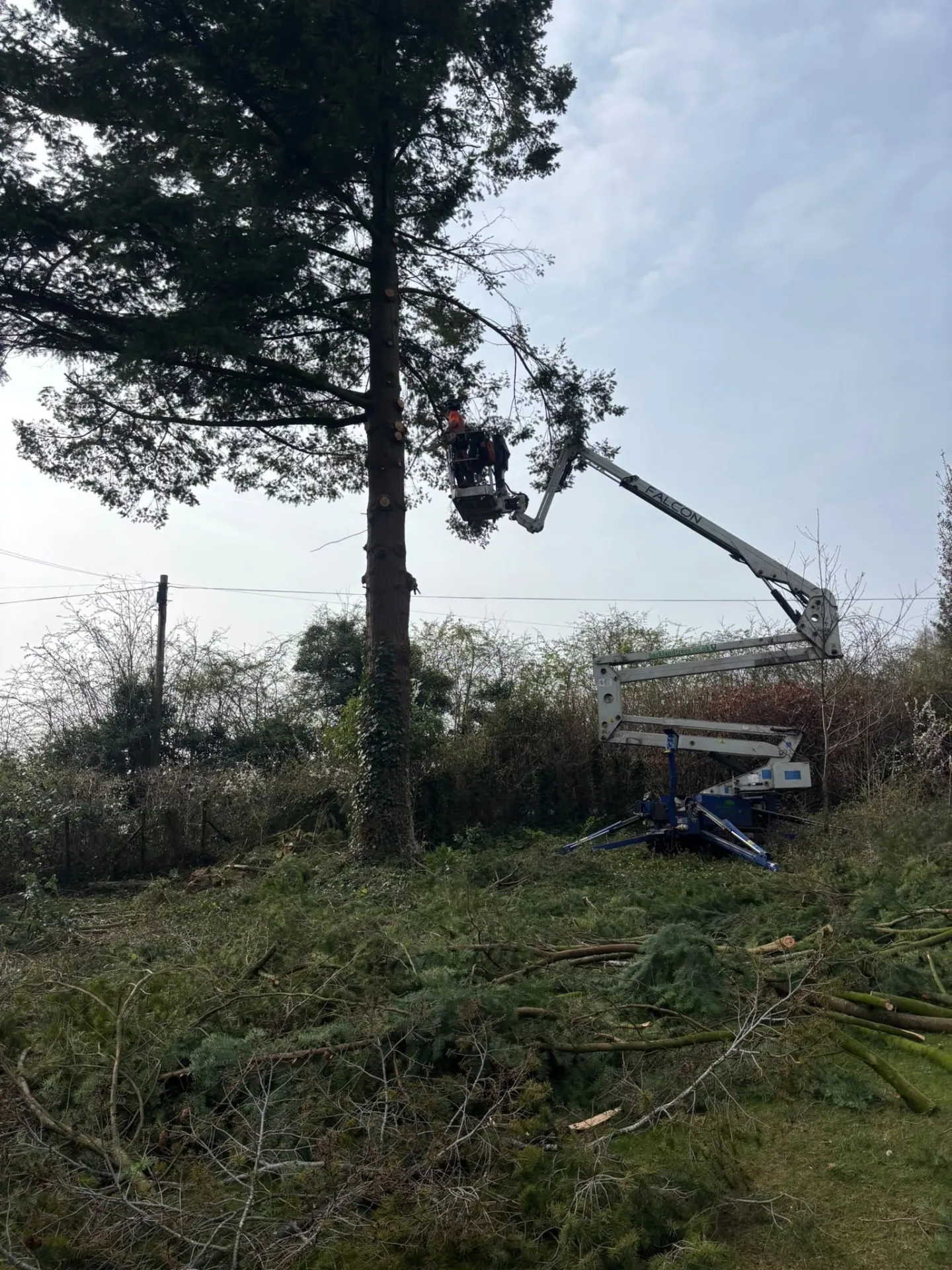
Sections are cut and moved clear using the appropriate equipment, protecting lawns, beds, fences and anything else nearby.
- 04
Root plate and stump
Where a root plate has lifted, it is assessed and, where agreed, the stump can be ground down as part of the same visit.
- 05
Clearance and payment
All timber and debris is cleared from site and removed as registered waste carriers. Payment is taken once the work is finished; no deposit is required beforehand.
Why use a professional for fallen tree removal
Safer handling of hidden tension
A trained assessment identifies where a fallen tree is still under load, reducing the risk of sudden movement during cutting.
Faster access restored
Driveways, paths and gardens are cleared properly rather than just enough to walk around the tree.
Less secondary damage
Careful sectioning and lifting protect fences, lawns, beds and anything else the tree is resting against.
No deposit needed
You are not asked to pay anything before the job starts, which matters when you are already dealing with storm damage or unexpected costs.
Complete site clearance
Trunk, branches and brash are all removed, not just the parts blocking immediate access.
Insured throughout
£2 million public liability cover applies for the whole job, from assessment through to final clearance.
In detail
Fallen trees in more detail
Why trees fall
Trees fall for a range of reasons: high winds acting on a large canopy, waterlogged ground reducing root grip, long-term decay weakening the trunk or root plate, or simple old age. Shallow-rooted species are particularly prone to being uprooted in storms, while trees with internal decay can fail even in moderate weather.
The way a tree has fallen affects how it is removed. A tree that has come down cleanly onto open ground is generally more straightforward than one caught up in a neighbouring canopy or resting against a structure, where the sequence of cuts has to account for what is supporting its weight.
Root plates and replanting considerations
When a tree uproots, it often brings a section of root plate with it, leaving a cavity in the ground. This can be backfilled once the tree is removed, and where a replacement tree is wanted, the site can be prepared as part of the same visit.
Stump handling after a fallen tree
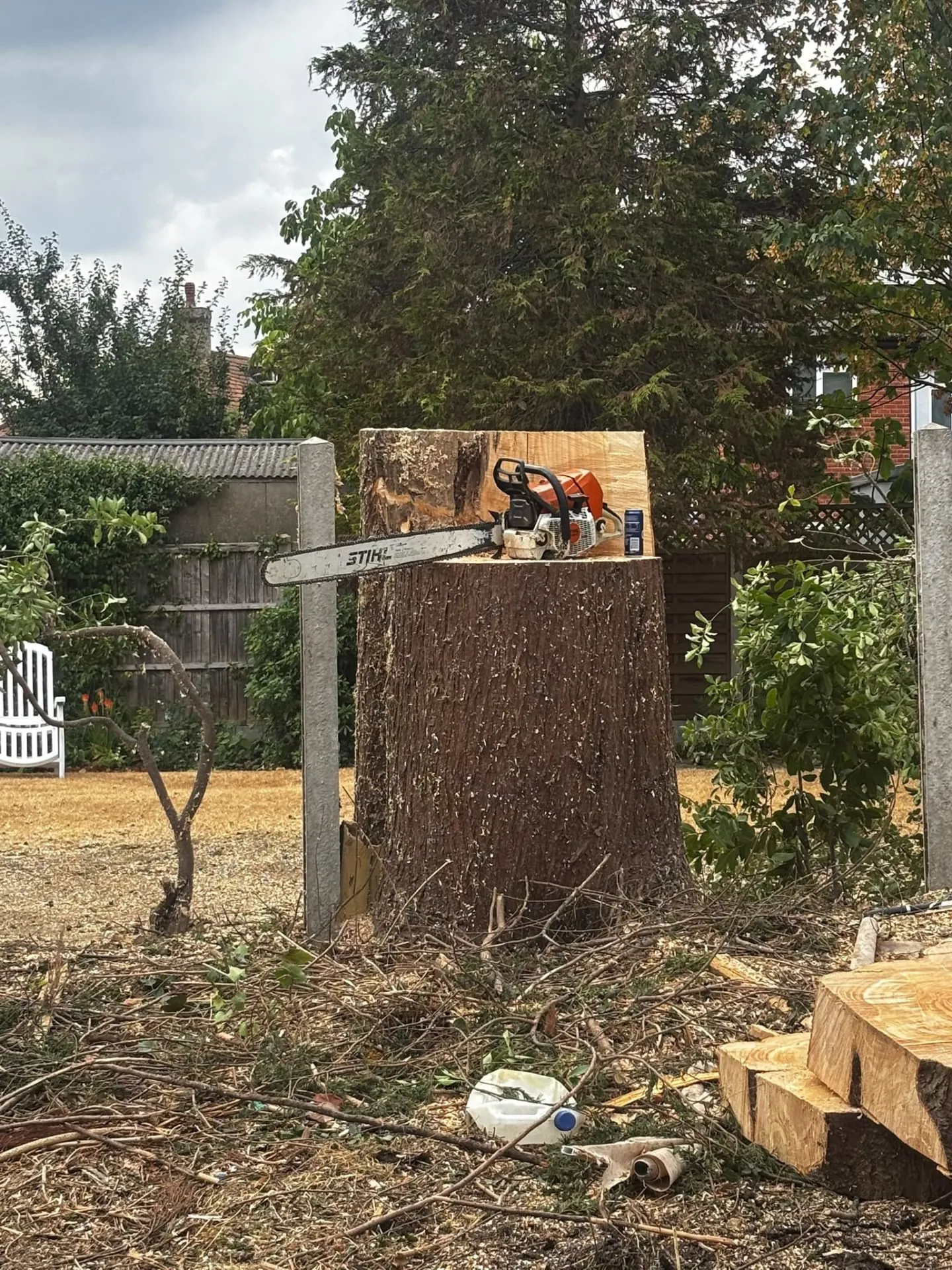
Where the trunk has snapped rather than uprooted, a stump will usually remain in the ground. This can be ground down to below soil level in the same visit if required, clearing the area fully for replanting, turfing or paving.
Consents and responsibility
Even where a tree has already fallen, if it was subject to a Tree Preservation Order or sits in a conservation area, there may be requirements around its removal or replacement. Checking this and obtaining any necessary consent is the customer's responsibility. This applies even when the tree is already down, since some orders cover replanting obligations as well as the standing tree itself.
Related services
Areas we cover
Kingston upon Thames, Ealing, Farnborough, Richmond upon Thames, Watford, Maidenhead, Beaconsfield, Hammersmith, Fulham, Guildford.
Fallen Tree Removal FAQs
How much does fallen tree removal cost?+
There's no published price list, as cost depends on the size of the tree and how it has fallen. We give a quote on site, take no deposit, and you pay once the tree is fully cleared.
How quickly can a fallen tree be removed?+
Where a fallen tree is an immediate danger, it is treated as emergency work and covered 24/7. Where it is not blocking access or posing a risk, it can be scheduled as routine work, carried out 7am to 6pm, seven days a week.
What's involved in removing a fallen tree?+
We assess how the tree has fallen, section and remove the trunk and branches safely, deal with the root plate or stump if needed, and clear all debris before payment is taken.
Do you offer a guarantee on fallen tree removal?+
No written guarantee is offered on this or any job. You only pay once the tree has been fully removed and the site cleared.
Will a new tree grow from the stump?+
Some species can regrow from a stump left in the ground, while others will not. If you want to prevent regrowth entirely, the stump can be ground out in the same visit.
Is fallen tree removal classed as an emergency?+
It depends on the situation. A tree blocking a road, resting on a building or still moving is an emergency and covered 24/7. A tree down in an open part of the garden with no immediate danger can be booked in as routine work.
Do you clear the mess afterwards?+
Yes. All cut timber, branches and brash are removed from site as part of the job. We're a registered waste carrier, so nothing is left for you to dispose of.
Which areas do you cover for fallen tree removal?+
We cover Kingston upon Thames, Ealing, Farnborough, Richmond upon Thames, Watford, Maidenhead, Beaconsfield, Hammersmith, Fulham, Guildford and the surrounding areas.
Can a fallen tree damage my drains or foundations?+
A lifted root plate can disturb nearby paving, drainage or shallow foundations, which is worth having checked once the tree itself has been removed.
Do you remove fallen trees from roads and shared driveways?+
Yes, fallen trees blocking roads, shared driveways or access routes are treated as a priority, particularly where they are stopping other people from getting in or out.
What happens to the wood once it is removed?+
Cut timber and brash are taken away from site as part of the job, in line with our registered waste carrier status, so there is nothing left for you to arrange separately.
Get your fallen treeremoved and cleared
Call now for a no-obligation quote. No deposit required: payment is only taken once the tree is removed and the site is clear.
NPTC & LANTRA qualified · £2m insured · No deposit