Based in Staines-upon-Thames
Your Local Tree Surgeonsin Staines-upon-Thames
From pruning and crown thinning to dead wooding and shaping overgrown trees, each job is quoted on site and finished to a standard you can check before you pay.
The service
What tree surgery covers, and who needs it
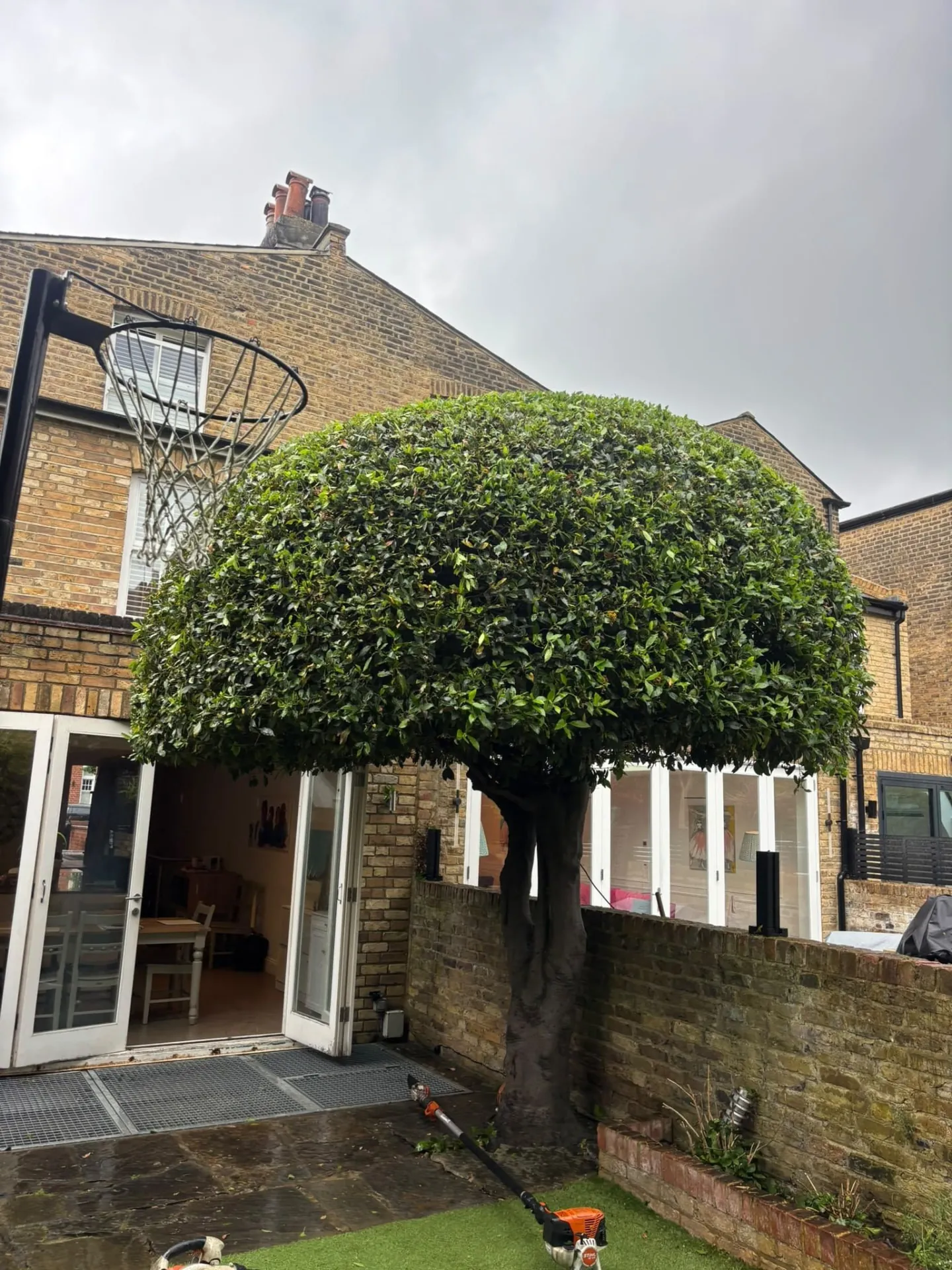
Tree surgery is the general term for hands-on tree care that keeps a tree healthy, safe and the right shape, without taking it down completely. It covers pruning, crown thinning, crown lifting, dead wooding, formative shaping of younger trees, and general maintenance of established ones. Where tree removal is the end of a tree's life in that spot, tree surgery is what keeps a tree in good condition for years to come.
It's work for homeowners with a tree that's grown too dense, too tall, or too close to a house, as well as for anyone with a tree that's started dropping dead branches, has a lopsided crown after storm damage, or simply hasn't been touched in years and needs bringing back under control. Landlords, property managers and anyone preparing a garden for sale also call for tree surgery, since a well-kept tree is a visible sign that a property has been looked after.
Timing matters. Some pruning is best done while a tree is dormant over winter, while deadwood removal and safety work can be carried out at any time of year, particularly once a hazard has been spotted. A professional eye also catches problems that aren't obvious from the ground, such as early decay, included bark at a branch union, or a crack that's started to open after wind.
Climbing and cutting into a live tree from height carries real risk, both to the person doing the work and to anything below. The Tree Fellowes has eight years of experience across gardens in Staines, Kingston upon Thames, Richmond upon Thames, Ealing, Watford, Maidenhead, Beaconsfield, Hammersmith, Fulham, Farnborough and Guildford, working to NPTC and LANTRA qualifications and carrying £2 million of public liability insurance on every job.
Recent Jobs
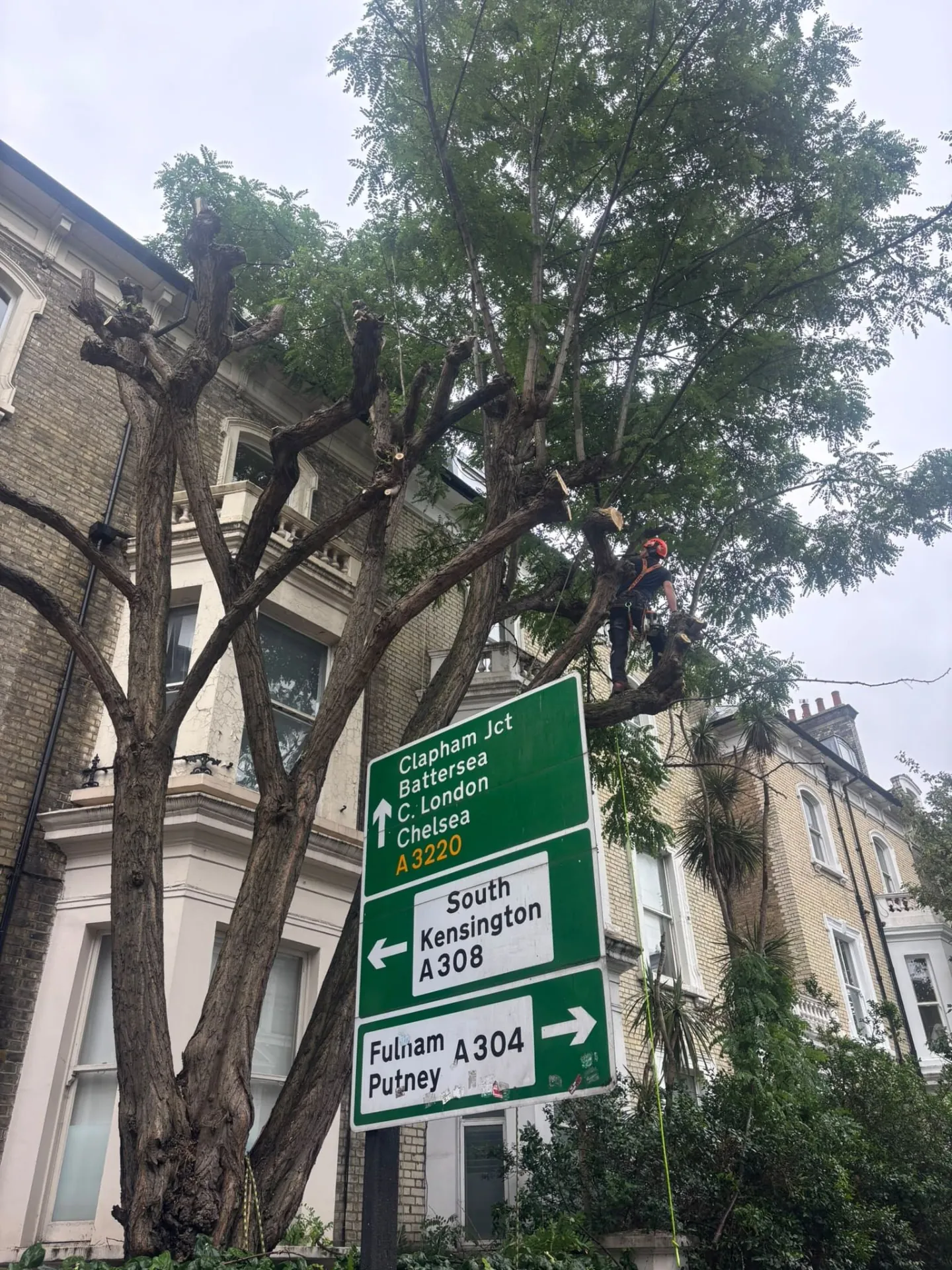
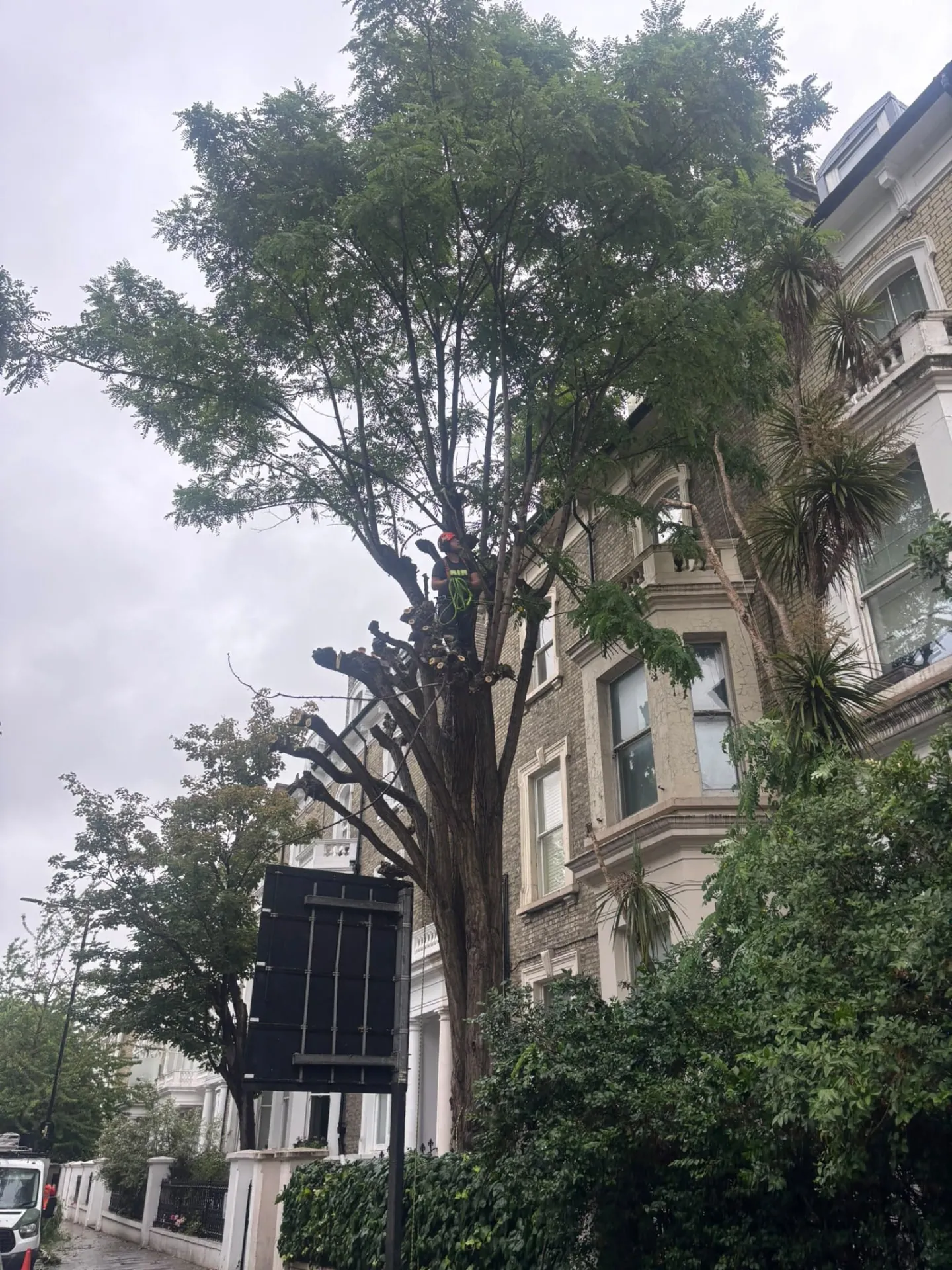
What happens when tree surgery is put off
A tree that needs pruning or dead wooding doesn't fix itself. Left alone, small problems tend to turn into bigger, more expensive and more dangerous ones.
Dead branches become a falling hazard
Deadwood doesn't bend in wind the way a living branch does; it snaps. Left in place over a path, a patio or a parked car, it's only a matter of time before a dead limb comes down.
Overgrown crowns block light and cause damp
A dense, untouched crown shades out lawns and borders beneath it and can keep a nearby wall or fence permanently damp, encouraging moss, algae and rot.
Poor structure gets worse with age
Weak branch unions, crossing limbs and included bark don't improve on their own. The longer they're left, the heavier the branches get and the more force they put on an already weak joint.
Common mistakes we see
- ✕Topping a tree, which removes the crown wholesale and tends to trigger weak, fast regrowth rather than solving the original problem.
- ✕Pruning at the wrong time of year for the species, which can stress the tree or encourage disease to take hold through fresh cuts.
- ✕Using unqualified labour for climbing work, which carries real risk of injury and property damage without insurance behind it.
- ✕Ignoring a lopsided or storm-damaged crown instead of having it assessed, until a weak limb fails in the next spell of wind.
- ✕Leaving deadwood in a tree that overhangs a driveway, path or neighbouring garden rather than having it removed promptly.
How it works
How a tree surgery job is carried out
- 01
Site visit and assessment
The tree is looked at in person, including its structure, any deadwood, and what's underneath it, before a fixed, written quote is given with no deposit required.
- 02
Agreeing the work
What's needed is agreed clearly before any cutting starts, whether that's a crown thin, a crown lift, dead wooding, or general shaping, so there are no surprises on the day.
- 03
Climbing and cutting
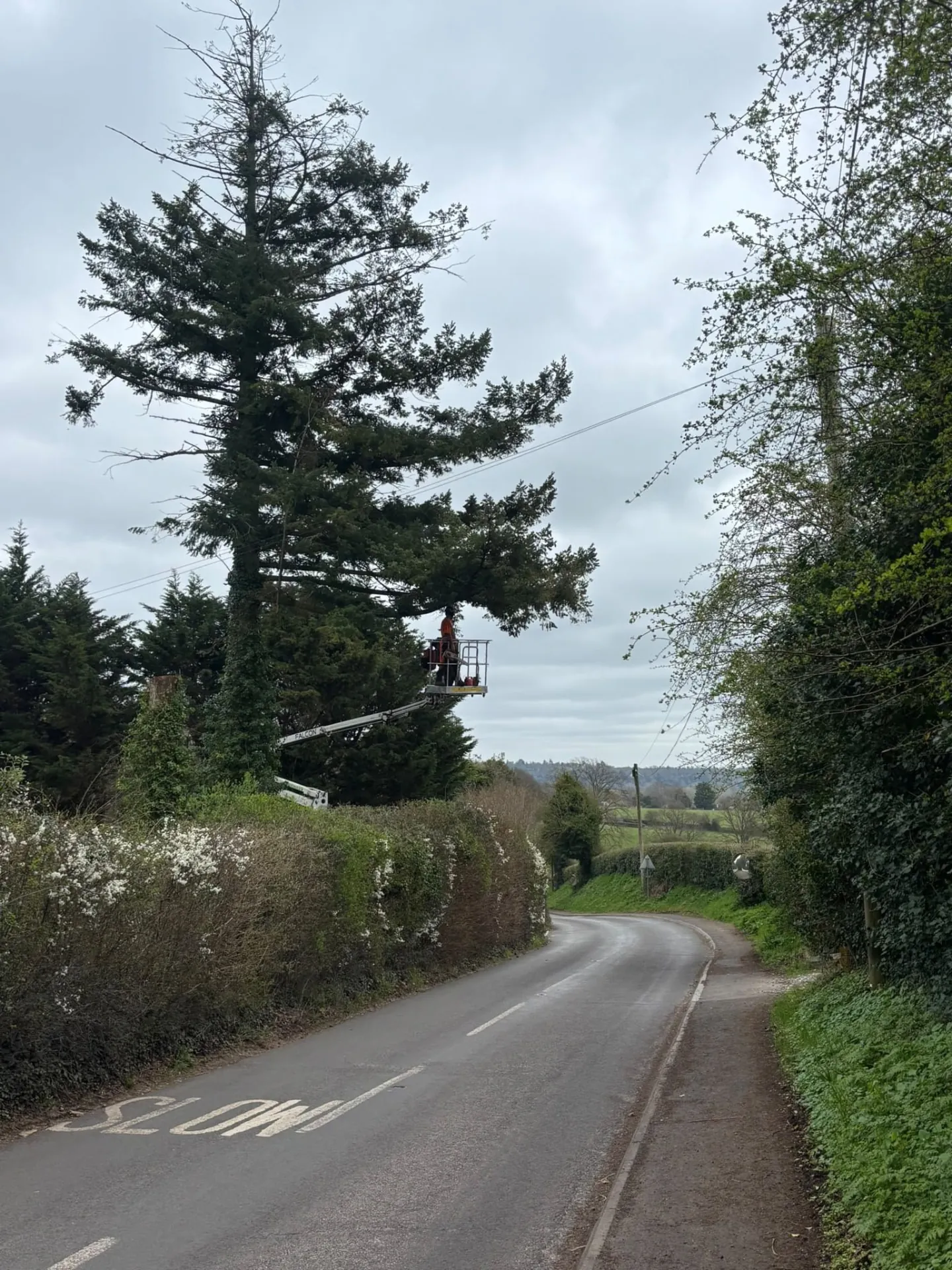
Climbers access the tree using ropes and harnesses rather than machinery wherever possible, working through the crown methodically and removing material in a controlled, lowered manner near buildings or boundaries.
- 04
Checking the finished shape
The crown is checked from the ground once work is complete, to confirm the shape and balance match what was agreed before the climber comes down for the final time.
- 05
Clear-up and sign-off
Branches, brash and offcuts are cleared from site as a registered waste carrier, the area is swept, and payment is taken once you're happy with the finished job.
What professional tree surgery gets you
A safer garden
Removing deadwood and weak limbs takes away the risk of branches failing over paths, patios, cars and sheds.
A healthier tree
Thinning and shaping improves airflow and light through the crown, which supports stronger, more even growth.
Work done at height, safely
Rope and harness climbing by NPTC and LANTRA qualified tree surgeons avoids the damage that machinery or ladders can cause.
More light in the garden
Crown lifting and thinning let more daylight reach lawns, borders and windows that have been shaded out.
Covered by £2 million public liability insurance
Work at height around a house or a boundary fence carries real risk, and the cover is there if anything is ever damaged.
No deposit, paid once you're satisfied
Quotes are fixed, and nothing is paid until the finished shape has been checked and agreed.
In detail
Types of tree surgery and when each is used
Crown thinning, lifting and reduction
Crown thinning removes a proportion of smaller branches throughout the crown to let more light and air through, without changing the tree's overall size or shape. Crown lifting removes the lowest branches to raise the canopy, useful where low limbs are blocking a path, a drive or a view, or where a lawn beneath the tree needs more light to grow properly. Crown reduction, by contrast, reduces the overall size of the tree while keeping its natural shape, often used where a tree has outgrown its space but removal isn't wanted or needed.
Dead wooding and hazard removal
Dead wooding is the removal of dead, dying or diseased branches from within a living tree's crown. It's one of the most common reasons for a tree surgery call-out, since deadwood is both a safety hazard and, left in place, a point where decay and pests can spread into otherwise healthy wood. It's carried out at any time of year, including as part of emergency callouts after storm damage.
Formative pruning for younger trees
Younger trees benefit from formative pruning, which shapes the structure early on to encourage a strong, well-balanced crown as the tree matures. Getting this right in the first few years of a tree's life reduces the amount of corrective work needed later and lowers the risk of structural problems developing as the tree gets bigger.
Residential gardens vs commercial and boundary trees
In residential gardens across Richmond upon Thames, Kingston upon Thames and Ealing, tree surgery is usually about balancing light, privacy and safety in a confined space. On commercial sites and larger plots near Watford, Guildford or Farnborough, the focus is often on maintaining boundary trees, keeping sightlines clear, and managing larger numbers of trees to a consistent standard across a site.
Related services
Areas we cover
Kingston upon Thames, Ealing, Farnborough, Richmond upon Thames, Watford, Maidenhead, Beaconsfield, Hammersmith, Fulham, Guildford.
Tree Surgery FAQs
How much does tree surgery cost?+
There's no price list published, since the cost depends on the tree, the access and the work involved. A site visit is used to give a fixed quote in writing, with no deposit taken.
How long does a tree surgery visit take?+
Most pruning, thinning or dead wooding jobs are completed in a few hours, within a single visit. Larger or multiple trees may take longer, which is confirmed during the quote.
What does the tree surgery process involve?+
A site visit confirms what's needed and gives a fixed quote, the climber then accesses the tree with ropes and a harness, carries out the agreed work, and clears all brash and offcuts before leaving.
Is there a guarantee on the work?+
No written guarantee is offered. Instead, the shape and finish are checked from the ground once work is complete, and payment is only taken once you're happy with how it looks.
How long does the result of tree surgery last?+
This depends on the species and how fast it grows, but a well-shaped crown typically holds its form for a few years before it needs attention again, with deadwood checks worth doing more regularly.
Can you carry out emergency tree surgery?+
Yes, 24/7 emergency callouts are available for storm damage and dangerous branches or trees. Routine tree surgery is carried out between 7am and 6pm, seven days a week.
Do I need permission to prune a tree?+
If a tree has a Tree Preservation Order or is within a conservation area, getting consent before work starts is the customer's responsibility, so it's worth checking with your local council first.
Which areas do you cover for tree surgery?+
Jobs are carried out across Staines, Kingston upon Thames, Ealing, Farnborough, Richmond upon Thames, Watford, Maidenhead, Beaconsfield, Hammersmith, Fulham and Guildford.
Book a tree surgeryquote this week
Get a fixed, written quote from a site visit, with no deposit and nothing to pay until the finished work has been checked and agreed.
NPTC & LANTRA qualified · £2m insured · No deposit